Blake Braun · 5 October 2026
Citizen-Led Initiatives Track Microplastic Distribution in Urban Pond Networks
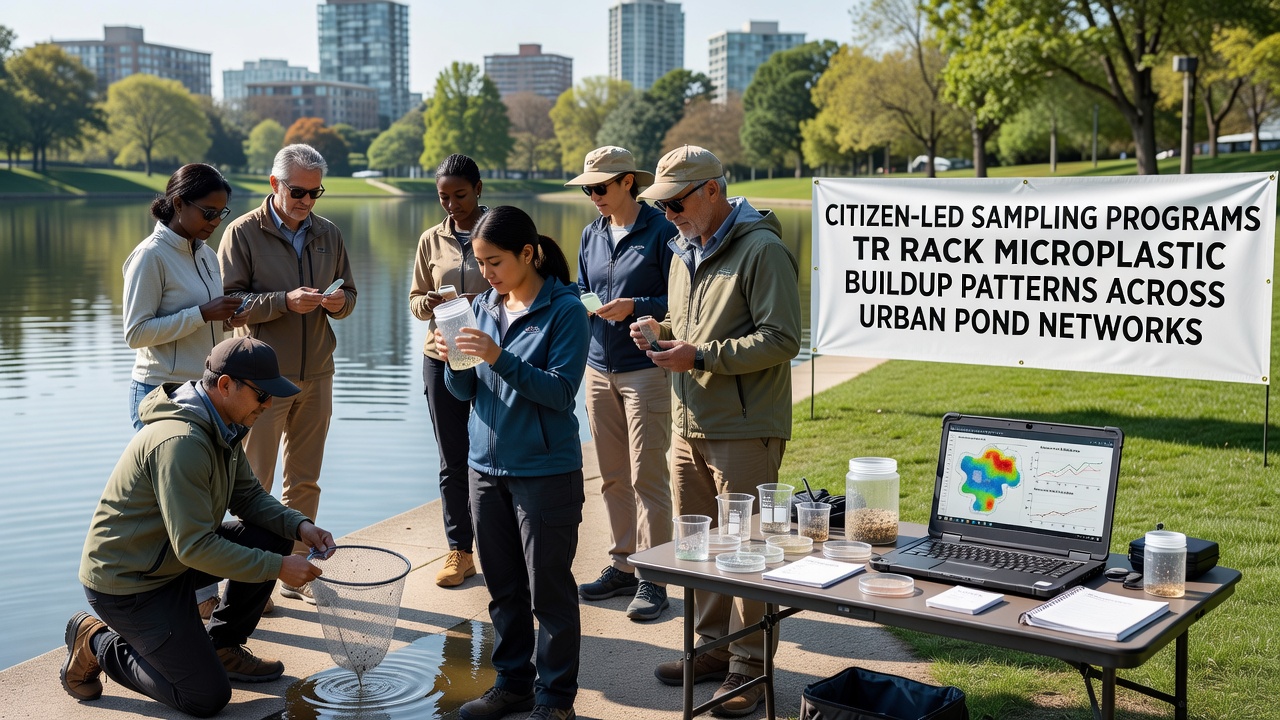
Urban pond networks across metropolitan regions have become focal points for citizen-led sampling programs that monitor microplastic accumulation, and these efforts rely on coordinated volunteer networks using standardized collection protocols to gather consistent data from multiple sites simultaneously. Programs in cities like Chicago, Toronto, and Melbourne coordinate monthly collections where participants use mesh nets with 300-micron openings to filter surface water while also scooping sediment cores from pond edges, then transport samples to partner laboratories for polymer identification through spectroscopy. Data from these initiatives show that polyethylene and polypropylene particles dominate the microplastic profiles in 78 percent of sampled urban ponds, with concentrations averaging 4.2 particles per liter in surface waters and rising to 12.7 particles per gram in bottom sediments according to aggregated reports compiled through 2025.
Program Structures and Volunteer Training
Training sessions occur quarterly at community centers where experts demonstrate proper sample preservation techniques using glass containers to avoid contamination from plastic alternatives, and participants learn to record GPS coordinates along with water temperature and pH levels that influence particle settling rates. Organizations such as the U.S. Environmental Protection Agency provide open-source field guides that standardize methods across regions, while similar frameworks from the European Environment Agency support programs in EU member states. Volunteers often form teams of three to five people who cover designated pond clusters, and this structure allows coverage of networks spanning 15 to 40 individual water bodies per city without requiring professional staff at every location.
Observed Buildup Patterns and Seasonal Variations
Analysis of data collected between 2023 and 2026 reveals that microplastic concentrations peak during spring runoff periods when stormwater carries particles from surrounding impervious surfaces into pond inflows, whereas summer months show reduced surface counts as particles sink and become trapped in algal mats. In October 2026 several programs released updated maps that highlight accumulation hotspots near drainage outfalls where particle densities reached three times the network average, prompting local authorities to install additional sediment traps at those points. Sediment cores extracted from ponds in dense commercial districts contained higher proportions of tire-derived particles and synthetic fibers compared to residential ponds, a pattern attributed to differences in surrounding land use and traffic volume.
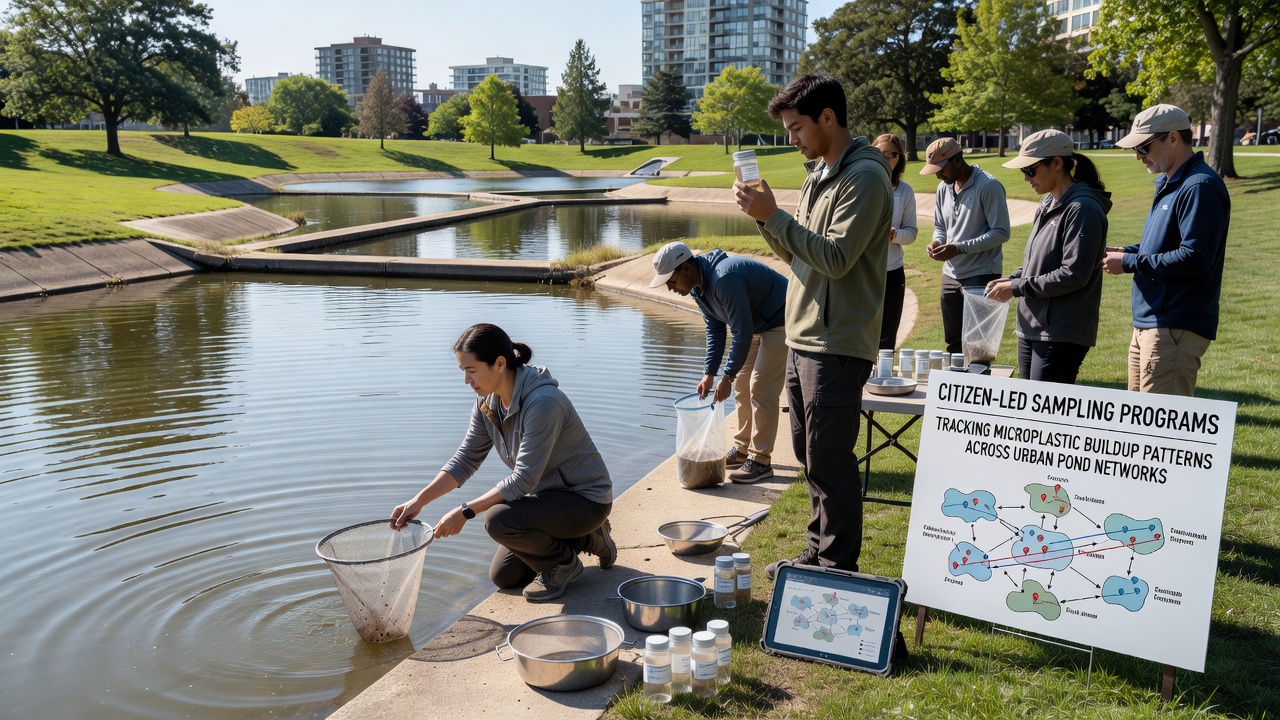
Researchers at collaborating universities cross-reference citizen data with satellite imagery of pond connectivity to model how water flow between linked basins redistributes particles over time, and findings indicate that downstream ponds accumulate 25 percent more microplastics than isolated upstream sites under similar input conditions. Programs in Australian cities have adopted similar approaches with support from the Commonwealth Scientific and Industrial Research Organisation, extending the geographic scope of comparable datasets.
Data Integration and Policy Applications
Centralized databases aggregate results from thousands of individual samples, allowing researchers to identify long-term trends while accounting for variables such as pond depth and vegetation cover that affect retention rates. Municipal planners use these visualizations to prioritize restoration projects, including the addition of floating wetland islands that trap particles before they settle into sediments. One study from McGill University integrated citizen-collected microplastic counts with hydrological models to predict future accumulation under different climate scenarios, showing potential increases of up to 40 percent in high-precipitation years.
Challenges in Standardization and Quality Control
Quality assurance remains a focus area because variations in volunteer technique can introduce inconsistencies, yet repeated inter-laboratory comparisons demonstrate that citizen data aligns within 15 percent of professional sampling results when protocols are followed closely. Programs address this through blind duplicate sampling and regular refresher workshops that emphasize contamination prevention during transport and handling. Equipment costs have decreased as open-source designs for sampling kits become more widely adopted, enabling expansion into additional cities without proportional budget increases.
Conclusion
Citizen-led sampling continues to expand the spatial and temporal resolution of microplastic monitoring in urban pond networks by combining volunteer capacity with laboratory verification, and the resulting datasets support targeted interventions while contributing to broader understanding of particle transport in modified aquatic environments. Ongoing refinements in methodology and data sharing protocols position these programs as sustainable components of environmental monitoring infrastructure.