Lars Jenkins · 19 October 2026
Sediment Microbes in Ponds Facilitate Key Water Purification Processes
Pond sediments contain diverse microbial communities that perform critical functions in breaking down organic matter and cycling nutrients, and these processes contribute directly to the natural purification of overlying water bodies. Researchers have documented how bacteria, archaea, and other microorganisms in the anoxic layers interact with pollutants such as nitrogen compounds, phosphorus, and various organic contaminants through metabolic pathways that reduce their concentrations before they reach the water column. Studies from multiple regions show consistent patterns where sediment depth correlates with shifts in microbial diversity, with surface layers hosting aerobic species that transition to anaerobic communities deeper down. Data collected across temperate and subtropical ponds indicate that denitrifying bacteria convert nitrates into nitrogen gas, while sulfate-reducing microbes and methanogens handle other chemical transformations that prevent nutrient buildup. According to reports from the United States Geological Survey, these sediment-based reactions account for substantial portions of nutrient removal in shallow aquatic systems, especially during periods of high organic input from surrounding watersheds. Observers note that seasonal temperature changes influence microbial activity rates, with warmer months accelerating decomposition and cooler periods slowing it without halting the overall purification effects.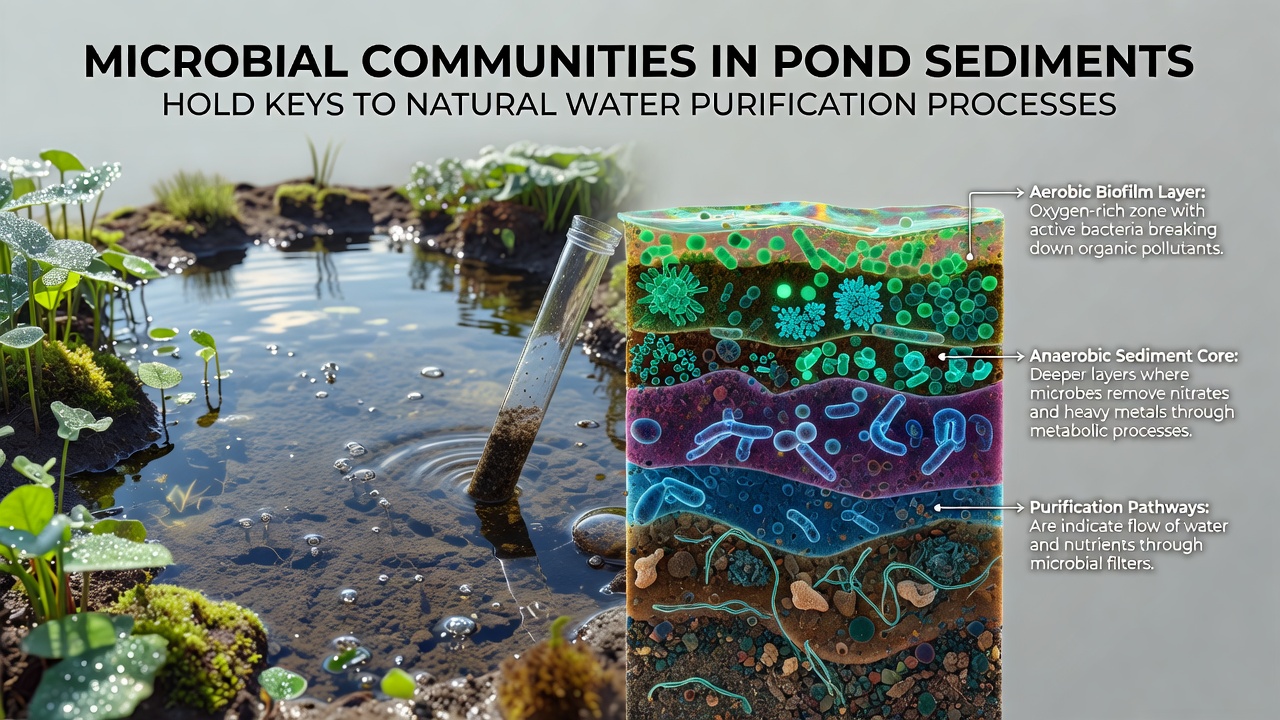
Pond sediments contain diverse microbial communities that perform critical functions in breaking down organic matter and cycling nutrients, and these processes contribute directly to the natural purification of overlying water bodies. Researchers have documented how bacteria, archaea, and other microorganisms in the anoxic layers interact with pollutants such as nitrogen compounds, phosphorus, and various organic contaminants through metabolic pathways that reduce their concentrations before they reach the water column. Studies from multiple regions show consistent patterns where sediment depth correlates with shifts in microbial diversity, with surface layers hosting aerobic species that transition to anaerobic communities deeper down. Data collected across temperate and subtropical ponds indicate that denitrifying bacteria convert nitrates into nitrogen gas, while sulfate-reducing microbes and methanogens handle other chemical transformations that prevent nutrient buildup. According to reports from the United States Geological Survey, these sediment-based reactions account for substantial portions of nutrient removal in shallow aquatic systems, especially during periods of high organic input from surrounding watersheds. Observers note that seasonal temperature changes influence microbial activity rates, with warmer months accelerating decomposition and cooler periods slowing it without halting the overall purification effects.Core Microbial Processes at Work
Several interconnected mechanisms operate simultaneously within pond sediments. Aerobic respiration near the sediment-water interface oxidizes carbon compounds, releasing energy that supports further microbial growth, while anaerobic processes below handle recalcitrant materials through fermentation and respiration using alternative electron acceptors. This layered activity creates redox gradients that drive the sequential removal of contaminants, and field measurements confirm that oxygen penetration rarely exceeds a few millimeters, leaving most of the sediment column under anaerobic conditions. Phosphorus binding occurs when iron and aluminum oxides in sediments interact with microbial metabolites, locking the nutrient into insoluble forms that remain buried rather than recycling back into the water. Research indicates that sulfate reduction can enhance this binding in some systems, although excessive sulfide production sometimes leads to other chemical shifts. Those who have examined pond cores from agricultural landscapes report elevated microbial densities near inflow points, where incoming sediments deliver both nutrients and additional microbial inocula that integrate into existing communities.Evidence from Field Studies
Take one long-term monitoring project conducted in Midwestern ponds where sediment samples revealed distinct microbial signatures tied to water quality improvements downstream. The work showed that ponds with thicker organic sediment layers sustained higher rates of organic pollutant degradation compared to those with sandy substrates, and the differences persisted across multiple sampling seasons. Similar patterns emerged in European pond networks, where researchers tracked methane oxidation by sediment archaea that prevented greenhouse gas releases while simultaneously processing carbon loads. In October 2026, teams from Australian research institutions plan expanded sampling across farm pond systems to quantify how drought-induced sediment compaction alters microbial community structure and subsequent purification efficiency. Early data previews suggest that compacted sediments maintain core anaerobic functions yet experience reduced surface exchange, which limits overall nutrient processing capacity until water levels recover.