Blake Braun · 3 November 2026
Owner-Led Conservation: Practical Workshops Equip Pond Keepers with Runoff Reduction Strategies
Owner-led conservation programs have expanded across agricultural regions as pond keepers seek methods to limit nutrient and sediment runoff into their water bodies, and practical workshops now form a core part of these efforts. These sessions focus on site-specific techniques that participants can implement without external contractors, drawing from soil science data and hydrology measurements collected over multiple seasons.
Runoff reduction begins with assessment of surrounding land use, and workshop instructors present soil sampling protocols that reveal phosphorus levels and erosion rates around pond perimeters. Participants learn to map flow paths using simple elevation tools while comparing results against regional datasets from the U.S. Department of Agriculture, which track average sediment yields in Midwest and Great Plains watersheds.
Core Techniques Taught in Workshop Sessions
Buffer strips receive primary attention because they intercept sheet flow before it reaches pond banks, and studies compiled by Agriculture and Agri-Food Canada show that 10-meter grass or native plant strips can capture 60 to 80 percent of incoming sediment under typical rainfall intensities. Workshop leaders demonstrate species selection suited to local climate zones, including deep-rooted grasses that stabilize banks during spring thaw cycles.
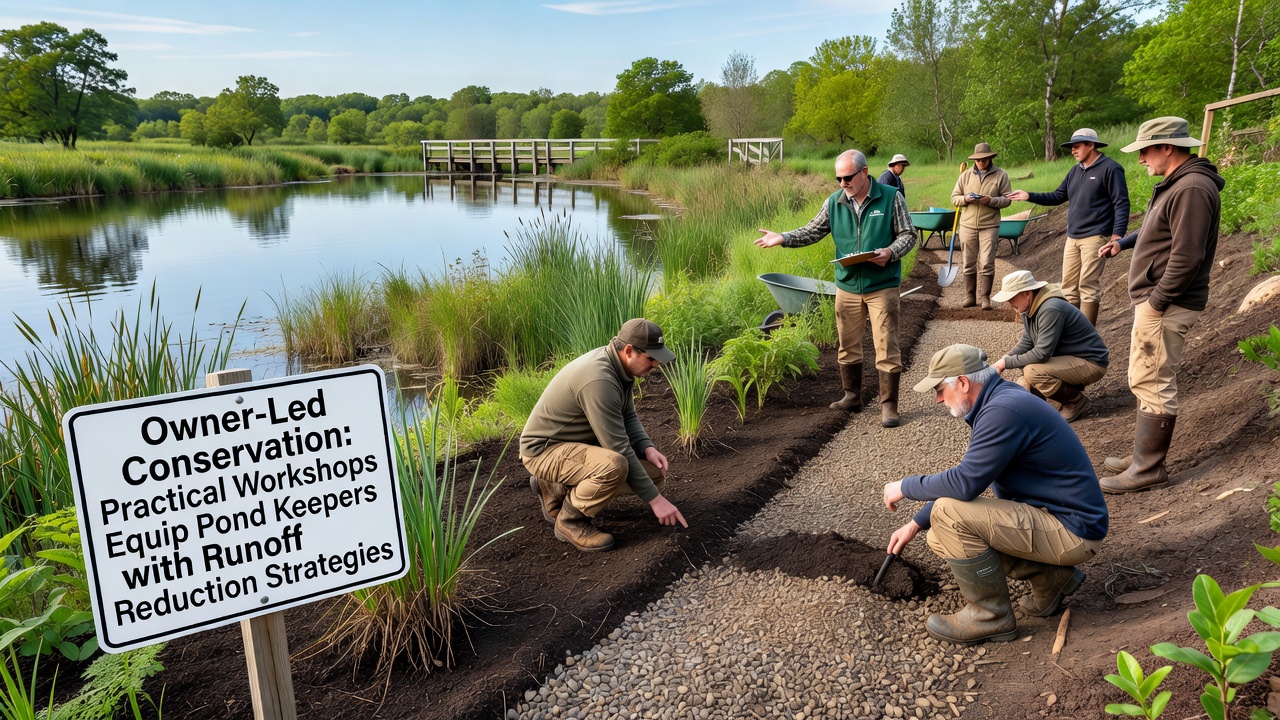
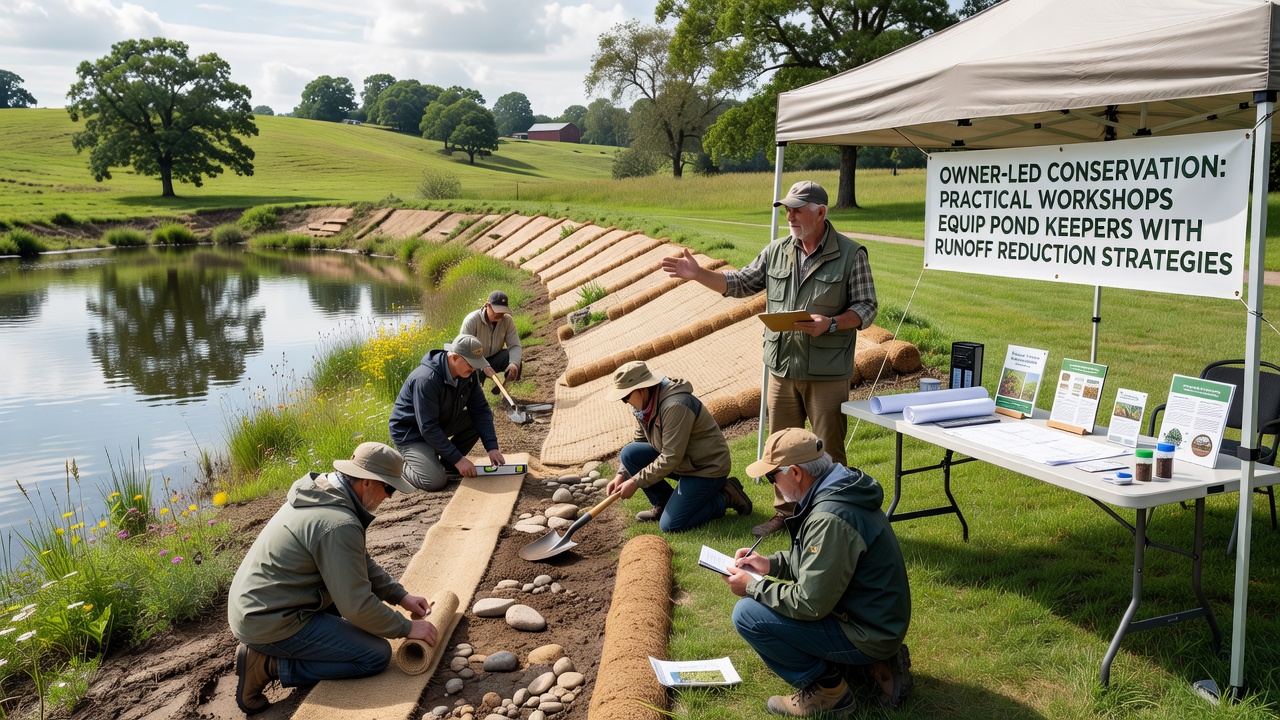
Vegetated swales and infiltration basins come next in the curriculum, with instructors guiding groups through layout calculations based on drainage area size and expected storm volumes. Attendees practice staking out contours on demonstration plots, then install check dams made from local stone or coir logs to slow water velocity and promote settling of suspended particles.
Rain garden construction forms another module, where participants calculate soil amendment ratios using compost and sand mixtures that increase infiltration rates by factors documented in peer-reviewed extension bulletins from Australian state departments. These features handle rooftop and driveway runoff while supporting pollinator habitat adjacent to pond ecosystems.
Regional Scheduling and November 2026 Events
Workshop calendars now include multi-day formats that combine classroom modules with field exercises, and organizers have scheduled intensive sessions for November 2026 in several northern states where frozen ground conditions allow clear observation of subsurface drainage patterns. These dates align with post-harvest periods when farmers can dedicate time without conflicting with planting or harvest operations.
Virtual follow-up modules supplement in-person training, providing recorded demonstrations of maintenance practices such as periodic sediment removal from swales and vegetation monitoring using standardized photo points. Data collected by past attendees indicate that consistent application of these methods reduces total suspended solids entering ponds by measurable percentages within the first two growing seasons.
Monitoring Outcomes and Data Collection
Long-term tracking relies on simple water clarity measurements and Secchi disk readings that participants record at fixed intervals, and aggregated results from multiple sites feed into regional databases maintained by university extension services. These records help identify which combinations of practices yield the strongest reductions in nutrient transport under varying precipitation regimes.
Cost-benefit analyses presented during workshops incorporate material prices and labor estimates drawn from actual installations, allowing keepers to project payback periods based on avoided dredging expenses and improved water quality metrics. Figures from completed projects show that initial investments in buffer establishment often recover within three to five years when sediment accumulation rates decline substantially.
Integration with Broader Watershed Efforts
Many workshop graduates coordinate their individual actions with larger watershed groups that monitor cumulative effects across multiple ponds and streams, and this linkage amplifies impact because upstream reductions lower the overall load reaching downstream water bodies. Coordination occurs through shared mapping platforms where landowners upload practice locations and observed changes without requiring centralized oversight.
Training materials emphasize adaptive management, encouraging keepers to adjust designs after observing performance during extreme weather events and to share modifications with subsequent workshop cohorts. This iterative process has produced refined specifications for check dam spacing and plant density that better match local soil textures and slope gradients.
Conclusion
Owner-led workshops continue to supply pond keepers with actionable runoff reduction methods grounded in measurable outcomes and regional data sources. As sessions scheduled for November 2026 approach, new cohorts will test and refine these strategies on additional properties, expanding the network of sites where documented reductions in sediment and nutrient delivery occur. Continued collection of field measurements will determine the scalability of these approaches across diverse agricultural landscapes.